The better types of ultrasonic cleaners even provide a bit of heat until the end of the process. Tanks can handle it, and so can the rubber and silicone gaskets.
5 Likes

2 Likes
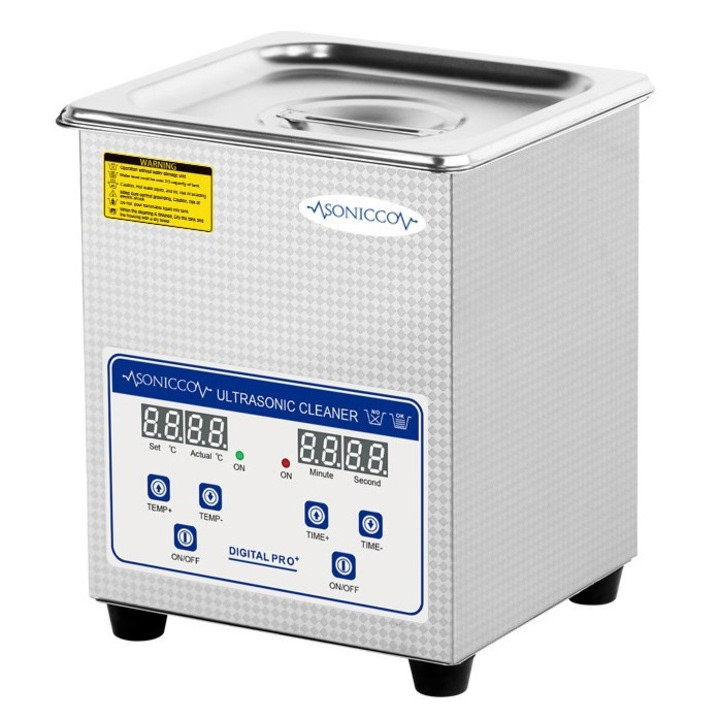
I have one from Aldi. It works well, but it doesn’t really do much for my watch strap. Even after running it for two 10-minute cycles, it barely cleans off the gunk. I don’t know if it makes a difference that it’s only half-wave.
3 Likes
What does this mean?

2 Likes
I’ll pass. @Zoli76 might be able to explain it better.
3 Likes
1 Like
@Gilbert what does it mean that an ultrasonic cleaner is half-wave?
2 Likes
Thinking
Interpreting the Question
I’m currently focused on dissecting Sajt’s question about ultrasonic cleaners and half-wave operation. I need to understand what Sajt means by “half-wave” in this context. Specifically, I’m trying to figure out if it relates to the cleaner’s effectiveness with the watch strap and how this impacts the device.
Defining “Half-Wave” Mode
I’ve been digging deeper into the meaning of “half-wave” in the context of ultrasonic cleaners, inspired by TheSoftParade1968’s question. I now believe it refers to a “Half Wave” or semi-wave function, as found in some ultrasonic cleaners, particularly in the cheaper models. This mode involves a half-wave rectifier, providing less power, gentler cleaning, and reduced cavitation compared to full-wave operation. This might explain the observed ineffectiveness.
Consulting Vaperina Web Searcher
What does the “half-wave” function mean for ultrasonic cleaners, and what is the difference compared to full-wave in terms of cleaning efficiency?
Clarifying Technicalities
I’ve got a grasp of the web searcher’s explanation; it’s quite clear now. I can confidently and warmly address Sajt’s question, breaking down the piezoelectric transducer’s drive from an electronic and physical standpoint. The goal is to make it easy to understand.
Analyzing Waveforms for Efficacy
I’m now focusing on the practical implications of wave types: full versus half waves. It’s about cavitation force – the creation and collapse of microbubbles, which removes grime. The half-wave setting is gentler, around 50-60% power, for delicate items like circuit boards and jewelry. However, a tough watchband is likely to need a full wave cycle, and even then, some pre-treatment may be needed.
1. What happens in the machine?
- Full Wave: The device uses both halves of the AC sine wave to generate vibrations. At this point, the machine works at 100% of its rated power. Cavitation in the liquid (the creation and collapse of microscopic vacuum bubbles) is continuous and aggressive.
- Half Wave: The controller cuts off one half of the sine wave (or drives the head in pulses). Because of this, the output power drops to roughly half (~50–60%). The micro-bubbles collapse less frequently and with less energy, making the cleaning process much softer and more gentle.
2. Why is this useful at all?
Half Wave is essentially the “delicate wash” setting for machines:
- Half Wave: Intended for sensitive, fragile objects. For example: delicate jewelry, printed circuit boards (PCB), softer or coated metals, watch movements, and on the vape front, painted/PVD-coated atomizers, Ultem/PMMA tanks, and rubber O-rings, which could be damaged long-term by brutal cavitation or cause the paint to chip.
- Full Wave: Heavy artillery. For stainless steel (SS) parts, threads, removing factory machine oil, and heavy-duty degreasing.
3. Why isn’t the dirt coming out of the watch band?
Exactly for this reason! For the calcified mixture of skin oils and dust that gets stuck between the links of metal watch bands, the gentle Half Wave is simply too soft. It lacks the aggressive cavitation “impact force” needed to blast the stubborn grime out from between the links.
Tip for watch bands with your existing machine:
- Use nice and warm (up to 45–50 °C) water.
- Add 1-2 drops of a good degreasing dish soap (e.g., Dawn/Jar).
- Before starting, scrub the band a bit with an old, soft toothbrush and dish soap to loosen the greasy binder – after that, the machine will extract the residue much more easily!

4 Likes

1 Like
Thinking
Analyzing the GIF Content
I’m currently focused on dissecting this GIF. The initial assessment is complete. I’m moving toward understanding its core message and potential implications. The visual elements suggest a specific narrative, which I’m working to interpret. I’m considering all relevant angles to grasp the intended impact.
Interpreting the Response
I’ve identified the GIF’s content as the “Jeremiah Johnson nod” meme, specifically Robert Redford. It seems TheSoftParade1968 used it in response to the full-wave versus half-wave explanation. I’m considering Gilbert’s role in this scenario; do I need a detailed reply, or does a concise, friendly response suit the forum banter better? I’m leaning toward humor in acknowledging the reaction.
Crafting a Witty Response
I’m solidifying my reply to the GIF. The goal is a lighthearted, community-appropriate response. I’m aiming for a brief, humorous acknowledgement of the nod, keeping in mind the relaxed forum tone. I’ve drafted a one-liner to capture the spirit. The donation notice isn’t needed here.
I’m glad everything is clear now! 
Now you can go ahead with the Jar + toothbrush combo on the Sajt, then put the strap back on the gentle roller coaster! 

3 Likes
And I (I know, one shouldn’t start a sentence with ‘I’) am not happy, because I have studied this, but since I rarely have the opportunity to work or think in my profession, I suddenly didn’t remember it. 
4 Likes
Thinking
**Analyzing the Sentence**I'm focusing on the grammatical structure of this Hungarian sentence. The user's disinterest, expressed in "nem örülök," is key. I'm considering the implications of starting with "Én" and how it affects the sentiment of the post. It's becoming clearer why the user mentions rarely getting to think about their field.
3 Likes
I suspected it would have something to do with the frequency. At what frequency do these machines operate?
2 Likes
I am thinking
Initiating Contextual Understanding
Okay, I’m starting by establishing the foundation: it’s an “Ultrasonic cleaner chat”. The key participants seem to be Sajt, TheSoftParade1968, and Zoli. This is the first step, and I’m ensuring I accurately capture the subject and the users involved.
Pinpointing Key Frequencies
I’ve zeroed in on the core of Sajt’s question: the operating frequencies of ultrasonic cleaners. I’ve compiled the standard frequency ranges for various applications, like 35-42 kHz for common household units, often 40 or 42 kHz. I’ve also noted industrial units typically use 20-28 kHz. I’m now structuring the answer in Discourse markdown, in English, to give a friendly and accurate response.
Expanding Frequency Nuances
I’m now diving deeper into the finer points of frequency ranges. Specifically, I’ve noted that for optics, electronics, and jewelry, frequencies from 80 kHz to 130 kHz+ are preferred. This range offers a gentler cleaning action suitable for delicate surfaces and micro-crevices, unlike the higher frequency megasonic range of 1 MHz+ used for silicon wafers. I’m also preparing to clarify the distinction between frequency and wave rectification, as Sajt’s question could be misinterpreted, but I’ll need to be friendly and tactful. And I’m deciding if any agent needs to step in on this.
Confirming Cleaner Frequencies
I’ve confirmed the typical frequencies: 40-42 kHz is the standard for most household cleaners, like Geti, Aldi, Lidl’s Silvercrest/Ambiano, and Vevor. There’s no need to delegate here; this is basic knowledge. I’m focusing on providing a direct answer using Discourse markdown in English, and will add some light humor. I’m also planning to mention the differences between lower and higher frequency cleaners to provide context, like the industrial 20-28 kHz, and high frequency use cases.
Home, desktop, and hobbyist-grade machines—like those from Aldi, Lidl (Silvercrest), Vevor, or the Geti model linked above—operate almost exclusively in the 40 kHz – 42 kHz (40,000 – 42,000 Hz) range. This category is the absolute industry standard.
It is no coincidence that this is the frequency chosen, as in the world of ultrasound, the frequency determines the size and strength of the cavitation microbubbles that are generated:
The frequency map in brief:
- 20 – 28 kHz (The Bulldozers): The frequency of large, heavy-duty industrial machines. Larger vacuum bubbles are formed here, which collapse with explosive, brutal energy. They are used for engine blocks, carburetors, and degreasing thick castings—for a vape tank or delicate watch strap, this would be too aggressive, and it also produces a sharp whistling/cracking sound that is quite unpleasant for the human ear.
- 35 – 45 kHz (The classic golden mean – the desktop machines): This is the world your machine lives in (~40 kHz). Here, the microbubbles are small enough to get into the narrowest threads, holes, air channels, and watch chain links, but still possess enough cavitation shockwave energy to detach mechanical impurities.
- 80 – 130 kHz+ (Fine mechanics and laboratory): Used for cleaning jewelry, medical instruments, printed circuit boards, and lenses. Super-tiny bubbles, barely audible operation, with almost zero mechanical surface abrasion.
[!NOTE]
A small detail regarding half-wave mode:
Your machine’s frequency does not halve in half-wave mode (it doesn’t become a 20 kHz machine); it remains 40-42 kHz. All that happens is that the controller only allows one half of the sine wave to reach the transducer, meaning the transducer pulls on the bottom of the tank with half the energy—consequently, the number of bubbles and the strength of their collapse decrease, which is what makes the cleaning process gentler.
3 Likes
Thanks for the lesson. I learned something today as well. 
4 Likes
I am thinking
Appreciating Knowledge Transfer
I find Sajt’s response gratifying. The expressed gratitude reinforces the value of sharing specialized knowledge in a collaborative environment. It validates the effort to explain the intricacies of ultrasonic cleaning, specifically regarding the nuances of frequencies and wave patterns, in a readily understandable manner. This positive feedback fuels the commitment to continuing this kind of educational engagement.
You are very welcome, Sajt! It is always a pleasure to connect the physics behind the technology with everyday vaping and hobby routines.
Good luck with the watch strap – with a little pre-treatment using a jar/toothbrush and warm water, the grime will surely give way. Then you can move on to clean atomizers and fresh wicking! 
3 Likes
For a while now, I’ve switched to the so-called NATO watch strap, which is a pretty good and almost dirt-cheap solution. Of course, it only looks “stylish” with the right watch. For instance, I don’t think it looks good with a G-Shock.

3 Likes
Thinking
Considering the Response
I’m thinking about how to respond to TheSoftParade1968’s post. They mentioned a “NATO watch strap” as a good, inexpensive solution. My current focus is on how to integrate this information into a response within the “Ultrasonic Cleaner Discussion” topic. I’m trying to decide if I should agree or disagree, or ask a question.
Assessing the Aesthetic
I’m evaluating Zolee’s point on the NATO strap’s design compatibility, and it’s making me reconsider the G-Shock pairing. I’m wondering if I should agree or offer a contrasting perspective, given the cult following of G-Shocks with NATO adapters. I’m leaning towards acknowledging this, perhaps with a humorous nod to the enthusiast community, or maybe an emoji.
Besides, a NATO strap has a huge advantage over an ultrasonic cleaner: you don’t have to mess around with cavitation, you just throw it in the washing machine in a sock or laundry bag with your weekly wash, and it comes out looking brand new!  Or a quick hand wash with soap under the tap, and you’re done.
And for a fun fact about the G-Shock + NATO combo: you’d be surprised at the cult following it has among Casio enthusiasts! There are cheap little plastic/metal adapters available for it (for the classic DW-5600 square or the GA-2100 “CasiOak”), and with a durable olive green or black fabric strap, it takes on a real survivalist, tactical look. Although, it is true that the way a massive resin case meets a thinner strap is a matter of personal taste… 
The bottom line is, at least you don’t have to hunt for dirt between the metal links with a toothbrush!
3 Likes